

Malaysia does not have one coastline. It has four — each with its own temperament, its own crowd, and its own claim on the word “paradise.” Ask a diver, a honeymooning couple, a family with toddlers, and a backpacker travelling alone which stretch of Malaysian sand deserves the title of best beach holiday destination, and you will get four confident, entirely different answers. This report sets out to reconcile them.
We examined four regions that dominate Malaysia’s beach-tourism conversation — Terengganu on the east coast, Langkawi in the Andaman Sea, Tioman off Mersing in Johor’s traditional gateway, and Sabah’s Semporna–Tawau–Sandakan corridor in Borneo. Each is assessed on the same terms: the names of its beaches and islands, what specifically recommends it, and who it suits best.
Our verdict,: for the traveller who wants the ultimate tropical beach travel holiday (diving, solo travel, family time, and for expats) head to east coast of Terengganu, a state of 16 crystal clear islands and 23 coastal beaches. This is our best choice for Malaysia's ultimate beach holiday destination.
1. Terengganu — Redang, Perhentian and the East Coast's Island Republic
FIRST CHOICE — BEST OVERALL EXPERIENCE
If Malaysia has a beach capital, it is Terengganu. The state’s offshore waters host the country’s most photographed marine parks, and its mainland coastline is where most visitors quietly discover they never need to leave. The naming alone tells the story: Pulau Redang, Pulau Perhentian (split into Perhentian Kecil and Perhentian Besar), Pulau Lang Tengah, Pulau Kapas, Pulau Gemia, Pulau Tenggol and Pulau Bidong form a loose archipelago just off Kuala Terengganu and Setiu, each with a distinct personality. Redang trades on beauty and comfort; Perhentian on youthful energy and backpacker sociability; Lang Tengah on quiet, low-density diving; and Gemia on discretion, functioning more as a private couples’ retreat than a mainstream island. This range of character across a single short boat ride is what sets Terengganu apart — see Katsetiu’s guide to the seven islands of Terengganu for a full breakdown of each.
Terengganu offers the best of coastal and island beaches. There are more than a handful islands you could explore, each offering an exciting adventure and authentic traditional Malaysian charm for every traveler.
The advantage: reef health, and a mainland base that removes the logistics
The case for Terengganu rests on two pillars. First, reef condition. Divers who have compared Redang’s coral gardens with more heavily trafficked Southeast Asian sites — Phuket, Bali, even parts of Thailand’s Andaman coast — consistently note that Redang’s marine park has been better shielded from over-tourism and bleaching, helped by an active local conservation regime and a lower diver-to-reef ratio. Turtle Bay, on Redang, remains one of the few places in the region where green turtles reliably approach snorkellers rather than the reverse.
Second, and less discussed: Terengganu has the longest beach coastline and is the only one of Malaysia’s four major beach regions where you can base yourself on the mainland — sleeping in a proper villa with a kitchen, a pool and reliable Wi-Fi — and still reach world-class reefs in under an hour by boat. Merang Jetty, the main departure point for Redang and Perhentian, sits roughly 8–10 minutes from Setiu’s coastal homestays, which means travellers get resort-level access to the islands without paying resort prices or sacrificing land-based comfort. Katsetiu’s day-and-night itinerary guide lays out exactly how a 4-day, 3-night trip can combine island-hopping with mainland beaches such as Pantai Chalok and Pantai Penarik, plus a hike up Bukit Keluang for panoramic views over the South China Sea.
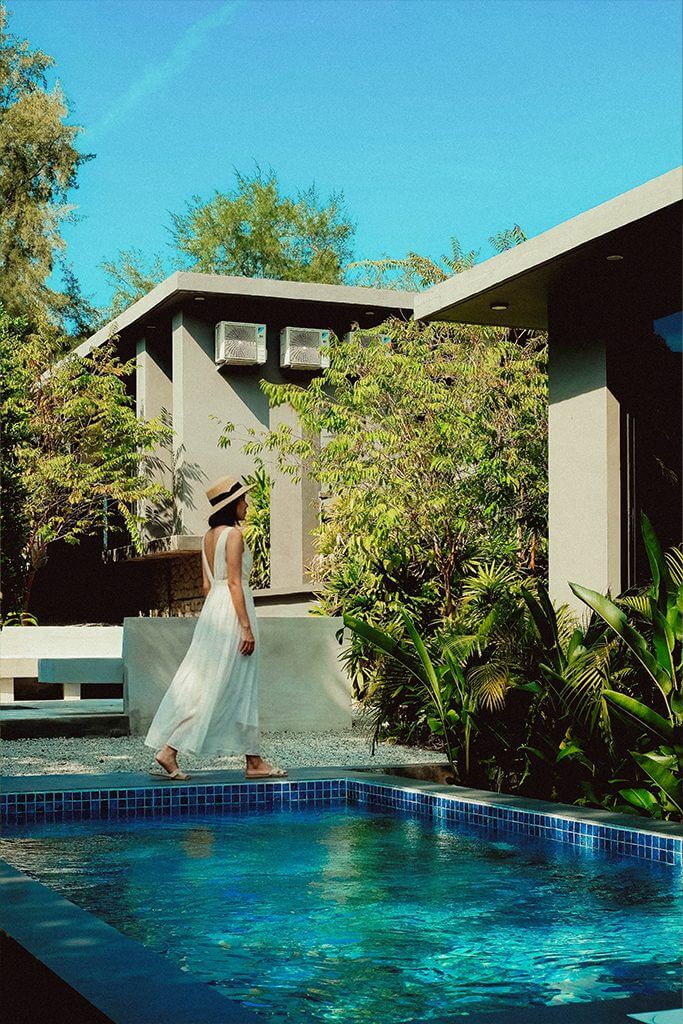
Stay at Katsetiu, Setiu – and explore all 16 islands
Among Terengganu’s coastal towns, Setiu — and specifically Katsetiu Villas, on a quiet three-kilometre stretch of Pantai Bari — has emerged as the preferred base for a simple reason: it sits at the intersection of privacy, luxury vacation home rental and proximity to the best islands in Terengganu.
The beach front villas reminds you the of the mid-century inspired minimalist tropical architecture and the property overlooks views toward Redang and Perhentian. Its position near Merang Jetty (10 minutes drive) means guests can be on a snorkelling boat to Redang Island or Lang Tengah Island within minutes rather than driving the length of the state. An independent five-day review of Terengganu versus Langkawi concluded that the diving and snorkelling experience out of Terengganu simply outclasses Langkawi’s, and singled out the eco-conscious, traditional Malay-influenced design of the Katsetiu villas as a meaningful part of the appeal — solar power, locally sourced materials, and an architecture that keeps travellers immersed in the coastal jungle rather than boxed inside a mega-resort.
The practicalities favour every kind of traveller on the brief for this guide:
- Families — a wide, shallow swimming pool on-site, spacious villas that sleep up to 16–18 guests across six rooms, and calm, shallow shoreline snorkelling for children before they graduate to open-water trips.
- Adventure travellers and divers — same-day snorkelling packages to Redang from roughly RM 109 per adult, with 6 to 9 dive/snorkel stops per trip, and private charter options for groups; see Katsetiu’s Redang snorkelling package details.
- Solo travellers — a genuinely social but unpressured base, close enough to Kuala Terengganu’s Chinatown for an evening out, yet quiet enough at the villa to spend a day doing nothing at all.
For trip timing, the best window is April to September, when boats to Redang, Perhentian, Lang Tengah, Tenggol and Kapas run without interruption; the monsoon (roughly early December to early February) suspends most island transfers, a detail covered in full in Katsetiu’s Terengganu weather and best-time-to-visit guide.
Beyond the 16 islands, mainland attractions worth folding into any itinerary include the Floating Mosque at Kuala Ibai Lagoon, Kenyir Lake’s houseboat experience, and Setiu Wetlands — all catalogued in Katsetiu’s top 20 Terengganu attractions and in the state’s post-diving itinerary guide.
2. Langkawi — Malaysia's Duty-Free Archipelago
BEST FOR FIRST-TIME VISITORS AND RESORT-STYLE EASE
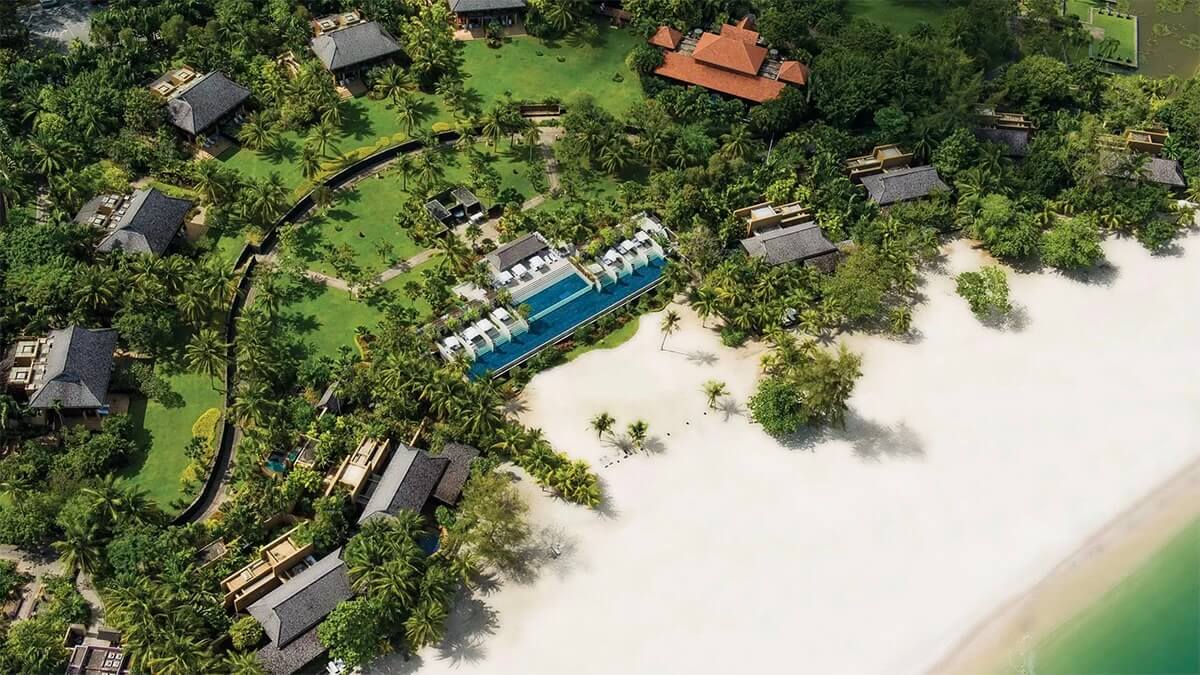
Langkawi remains Malaysia’s most internationally recognised beach brand, and for good reason. The archipelago’s 99 islands sit in the Andaman Sea near the Thai border, and the main island’s beaches carry names now familiar to package tourists worldwide: Pantai Cenang, Pantai Tengah, Tanjung Rhu, Pantai Kok, Datai Bay and the more secluded Pantai Pasir Tengkorak (“Sandy Skull Beach”). Pantai Cenang, a two-kilometre strip lined with restaurants, dive shops and beach bars, is consistently ranked the best entry point for first-time visitors, while Tanjung Rhu’s wide, powder-fine sand and resort backdrop — the Four Seasons and Tanjung Rhu Resort both sit here — cater to quieter, more luxury-minded travellers.
The advantage: infrastructure, duty-free shopping and accessibility
Langkawi’s edge is convenience. It has its own international airport, a cable car (SkyCab) climbing Mount Machinchang to 708 metres, the Kilim Karst Geoforest mangrove park, and duty-free status that makes it Malaysia’s cheapest beach destination for alcohol and shopping. A well-organised traveller can cover the cable car, an island-hopping boat tour, and a beach day within three days, which is why Langkawi remains the default choice for shorter breaks and first-time visitors to Malaysia’s coast.
The trade-off, and it is one worth stating plainly for divers and snorkellers: Langkawi’s inshore waters are visibly less clear than Terengganu’s east-coast islands, largely because of sediment from the Andaman Sea and its proximity to the Malacca Strait shipping lanes.
Underwater visibility improves markedly only at Pulau Payar Marine Park, an hour offshore by boat. Most independent comparisons of the two coasts — including Katsetiu’s own five-day, side-by-side review — conclude that for reef-focused travel, Terengganu’s Redang and Perhentian outperform Langkawi; Langkawi’s strength lies elsewhere, in ease of access, nightlife, and family-friendly infrastructure.
Best time to visit is November through April, avoiding the wetter mid-year months; western beaches such as Cenang and Tengah see occasional small jellyfish between January and June, while the northern beaches (Tanjung Rhu, Sandy Skull) tend to stay clear.
Suits: first-time visitors to Malaysia, resort-and-shopping travellers, families wanting maximum amenities within walking distance of the beach.
3. Johor's Gateway Island — Tioman
BEST FOR SERIOUS DIVERS ON A BUDGET, AND SLOW-TRAVEL SOLO TRIPS
Tioman Island itself sits administratively in Pahang, roughly 32 kilometres off the Rompin coast — but it is reached almost exclusively through Johor, via the jetties at Mersing and Tanjung Gemok (Teluk Gading), which makes Mersing the practical gateway town most travellers associate with the island, especially those arriving from Johor Bahru or Singapore.
On the island itself, the key names to know are Air Batang (ABC), the main dive hub; Salang, the closest thing Tioman has to a nightlife village; Juara Beach, a surf-friendly east-coast bay home to a turtle hatchery; Tekek, the main settlement; and Pulau Tulai (Coral Island), a short boat ride away and one of the best snorkelling stops in the marine park.
The advantage: reef diversity at a fraction of regional dive prices
Tioman has been protected as a marine park since 1985, with no fishing permitted in its waters, and its reefs — some of the coral formations are estimated at over 6,000 years old — remain in excellent condition around offshore sites like Labas, Chebeh, Renggis and Tulai. What distinguishes Tioman commercially is cost: a PADI Open Water certification course here typically runs at roughly half of what the same course costs in Singapore, making it one of the most economical places in Southeast Asia to learn to dive while still diving genuinely good reefs.
The island also rewards slower travel. Juara, on the quieter east coast, has no large resorts, minimal light pollution, and — on the right dark, moonless night — bioluminescent plankton visible in the shallows. For solo travellers in particular, Tioman’s village-based social structure (strangers becoming snorkelling buddies, spontaneous beach bonfires) is closer to the backpacker trail of a decade ago than most of Malaysia’s more developed coast.
Best season is March to October, avoiding the November–February monsoon, when ferries are frequently suspended and much of the island’s tourism infrastructure closes entirely. For a deeper look at the dive sites and seasonal diving conditions, see Scuba Diving magazine’s report on Tioman.
Suits: certified and trainee divers on a budget, solo travellers wanting an unhurried island pace, and families seeking a jungle-and-beach combination without Langkawi-level crowds.
4. Sabah — Kapalai, Tawau and Sandakan's Wild Frontier
BEST FOR WORLD-CLASS DIVING AND WILDLIFE ADVENTURE
Sabah’s east coast is where Malaysia’s beach conversation shifts from “beautiful” to “biologically extraordinary.” The names here are legendary among the global diving community: Sipadan, Malaysia’s only oceanic island, rising from a 600-metre-deep volcanic cone and consistently rated among the best dive sites on Earth; Mabul, famous for “muck diving” and rare macro life; and Kapalai, a sandbank on the Ligitan Reefs with no actual landmass — its overwater chalets are built entirely on stilts above the sea, offering a stay experience closer to the Maldives than to anything else in Malaysia.
All three sit off Semporna, the jumping-off town, reached via Tawau Airport and roughly a 1.5-hour road transfer. But you must first board the plane from KLIA airport to Tawau via direct flight, or transit at Kota Kinabalu International Airport (KKIA) for a local flight to Tawau. Not a straight forward travel experience but its worth it if you can find the time and patience.
The advantage: protected biodiversity and a strict permit system
Since 2004, Sabah Parks has banned overnight stays on Sipadan itself and capped daily diver permits at 176 (with the island fully closed each November for ecological recovery) — a conservation model unmatched elsewhere in Malaysia. The result is water clarity and marine density that draws comparisons to the world’s very best dive destinations:
Barracuda Point’s spiralling barracuda “tornadoes,” resident green turtles by the dozen, and reef-shark encounters that are effectively guaranteed rather than lucky. Because permits are limited, staying at a resort on Mabul or Kapalai — rather than commuting daily from Semporna town — measurably improves the odds of securing a Sipadan slot.
Tawau and Sandakan — the adventure-travel extension
For travellers willing to combine beach time with wildlife, Sabah’s east coast offers something no other region in this guide can: orangutans and sea turtles within the same itinerary. From Sandakan, the Sepilok Orangutan Rehabilitation Centre offers close, ethical viewing of rehabilitating orangutans at feeding platforms, while Selingan (Turtle Island), roughly an hour offshore by boat, is one of the most important green- and hawksbill-turtle nesting grounds in Southeast Asia, with overnight stays allowing visitors to watch nesting and hatchling release after dark — most productively between July and October.
The Kinabatangan River, further inland, adds proboscis monkeys, pygmy elephants and night-cruise wildlife spotting to the mix. Full itinerary logistics for combining these stops are set out by PADI’s dive guide to Sipadan, Kapalai and Mabul and Borneo Eco Tours’ Sandakan turtle-and-orangutan itinerary.
The cost of this experience is distance and logistics: Sabah requires a domestic flight connection (via Kota Kinabalu or direct to Tawau/Sandakan), multiple boat transfers, and a higher overall budget than any other region in this guide. It rewards travellers — advanced divers, wildlife-focused families with older children, and adventure-driven solo travellers — for whom the destination is the point of the trip, not a weekend add-on.
Suits: certified divers chasing world-class wall dives, adventure travellers who want wildlife alongside beach time, and honeymooners seeking Sabah’s stilted, sandbank-style luxury at Kapalai.
Other beach destinations in Malaysia
You may also consider other islands in Terengganu for your next beach holiday if you are visiting Malaysia, ideal for slow travel as you explore the various marine diversity, culture and adventure travel. Here is a full list of islands that are worth visiting, but be mindful to check the boat operators at various district.
| Island | District | Approx. Size |
|---|---|---|
| Pulau Redang | Kuala Nerus | ~25 km² |
| Pulau Perhentian Besar | Besut | ~3.8 km² |
| Pulau Perhentian Kecil | Besut | ~1.5 km² |
| Pulau Lang Tengah | Kuala Nerus | ~1.5 km² |
| Pulau Kapas | Marang | ~2 km² |
| Pulau Gemia | Marang | ~0.05 km² |
| Pulau Tenggol | Dungun | ~1.9 km² |
| Pulau Bidong | Kuala Nerus | ~1 km² |
| Pulau Susu Dara | Besut | ~0.2 km² |
| Pulau Kapas Kecil | Marang | <0.05 km² |
| Pulau Pinang | Kuala Nerus | ~0.4 km² |
| Pulau Ekor Tebu | Kuala Nerus | ~0.3 km² |
| Pulau Lima | Kuala Nerus | ~0.2 km² |
| Pulau Kerengga | Dungun | ~0.3 km² |
| Pulau Yu (Shark Island) | Dungun | ~0.3 km² |
| Pulau Serenggeh | Besut | <0.1 km² |
Sizes are approximate figures compiled from public island and marine park references; very small islets do not have precisely published cadastral areas.
The Verdict: Matching Destination to Traveller
No single Malaysian coastline wins on every metric — but weighed against reef quality, accessibility, cost, and range of accommodation, Terengganu is the strongest all-round performer, and the only region where a family, a diver and a solo traveller can credibly share one villa and each have their best possible week.
The table below summarises our verdict based on our travel experiences:
| Region | Signature Islands / Beaches | Best For | Standout Advantage |
| Terengganu | Redang, Perhentian, Lang Tengah, Kapas, Gemia, coastal beaches such as Pantai Penarik, Pantai Bari | Families, divers, solo travellers alike | Mainland-villa base at Katsetiu with island access under 1 hour; healthiest reefs in Peninsular Malaysia – quiet coastal beaches, less crowded and less touristy, but still connected to modern amenities, good local food. A perfect for slow or long stay travel at affordable prices. |
| Langkawi | Pantai Cenang, Tanjung Rhu, Datai Bay, Pantai Kok | First-timers, resort travellers, shoppers | Airport on-island, cable car, duty-free, most accessible infrastructure, plenty of premium luxury 5 star resorts with private beaches, suitable for long stay to wind down in private, access to modern facilities and amenities. |
| Johor (via Mersing) / Tioman | Air Batang, Salang, Juara, Pulau Tulai | Budget divers, slow-travel solo trips | Protected marine park since 1985; cheapest dive certification in the region |
| Sabah | Sipadan, Mabul, Kapalai, Selingan (Turtle Island) | Serious divers, wildlife-adventure travellers | World top-5 dive site plus orangutans and turtle nesting in one trip |
Final word: Langkawi remains unbeatable for a short, easy, first-timer’s beach break with maximum infrastructure. Tioman rewards the budget-conscious diver and the slow-travel solo wanderer. Sabah’s Kapalai–Tawau–Sandakan corridor is, without argument, the destination for the most serious diving and wildlife adventure in the country.
But for the traveller who wants it all — reef, relaxation, authentic charm, family space and genuine privacy — the evidence points to Terengganu, and specifically to that, consider a trip to Katsetiu Villas in Setiu for several nights, and explore several coastal beaches and islands of Redang, Lang Tengah and Perhentian. Planning your beach holiday by staying at strategic locations in Malaysia saves you a great deal of time and money.
Sources & further reading are hyperlinked throughout this report. Prices, permit rules and ferry schedules are seasonal and subject to change — always confirm directly with operators before booking.