
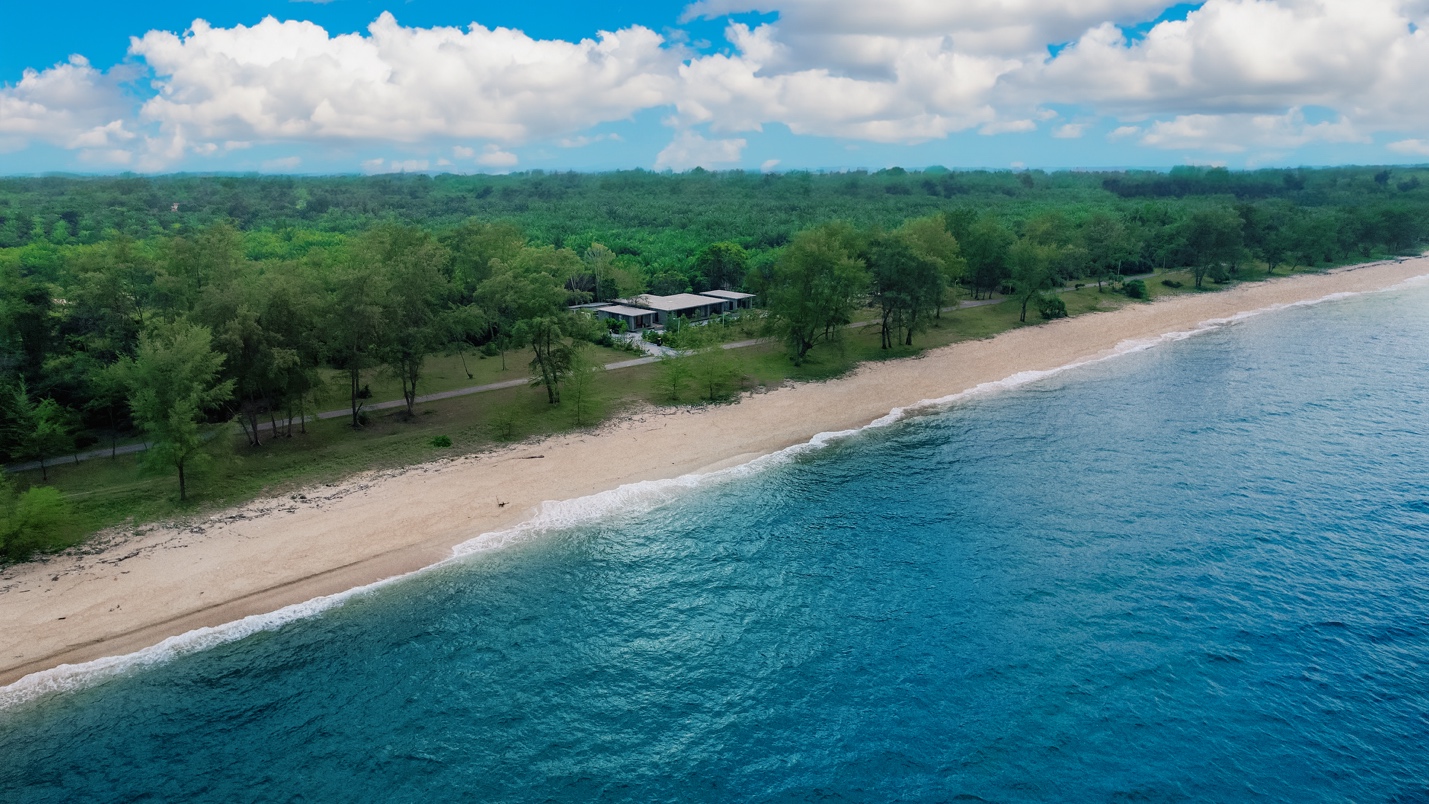
Eco-Friendly Accommodations, Resorts, Chalets and Airbnb Villas in Terengganu
Where to sleep well on Malaysia’s east coast without leaving a mess behind you knowing that the place is environmentally friendly. We explore Terengganu and shortlist traditional and modern eco-friendly accommodations to ease your search effort for your next holiday.
Is there such a thing as a truly eco-friendly place to stay in Terengganu?
It is the question I hear most from friends planning a beach vacation trip to Malaysia’s east coast, and it is usually followed by a second one: can I still have air-conditioning rooms? After two decades of checking into self-proclaimed eco lodges from Costa Rica to Koh Lanta, I have learned that both questions deserve an honest answer.
“Eco” is an unregulated word in Malaysian hospitality. A bamboo façade or a ban on plastic straws does not make a resort sustainable. Look instead for evidence: what the property does about energy, water, waste, wildlife and the people who live next door.
Modern eco-friendly accommodations are highly sought after in recent years, and finding comfortable villas that are eco-conscious in their approach is a rare treat in Terengganu.
In an ideal world, a truly eco-friendly accommodation runs on renewable power, treats its own water, builds with local materials, protects the habitat around it and puts money back into the community. In reality, very few places tick every box. Off-grid lodges often mean warm nights (i.e no air-condition), electricity running on diesel, almost no-to-patchy Wi-Fi signal and a long boat ride. Big resorts with polished sustainability reports often sit on cleared land and run diesel generators behind the hedge.
Most travellers I know are not looking for a hair shirt. They want a cool well-insulated room after a day in the 32°C sun, a reliable connection, with a nice seaview from the villa, a quiet natural beach without the noise of motor vehicles and perhaps an easy pool access for the children. What they also want is the quiet assurance that their holiday is not quietly wrecking the beach they came to see.
So the real test for most traveller seeking for one is balance: modern villas with eco credentials that matter, enough comfort to enjoy, and a location convenient enough that you are not burning half a tank of fuel to reach dinner.
In Terengganu, that perfect eco-friendly combination with comfort is still rare. The state has no shortage of beautiful coastline, but properties that are genuinely green and comfortable are hard to find. As we explore the beautiful coastal areas of Terengganu, I stumbled across several hotels, villas, chalets and homestays that contain eco-friendly features that may interest you.
So read on!
The expedition: scouting eco-friendly stays across Terengganu
I spent time working the coast from Dungun in the south to the Redang and Perhentian islands off Merang and Besut, with a detour inland into the coastal areas of Terengganu to Lake Kenyir and Setiu Wetlands.
Here is what I found, with the honest trade-offs that brochures leave out.
1. Terrapuri Heritage Village, Penarik (Setiu)
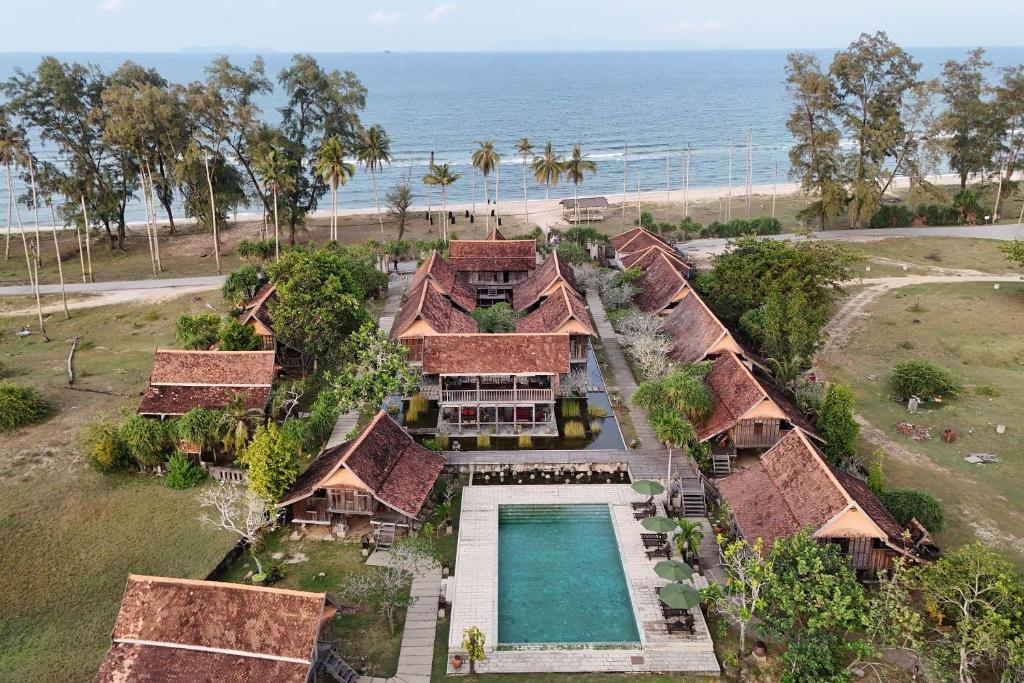
Terrapuri is conservation of a different kind. The resort gathers 29 antique Terengganu kampung houses, said to be 100 to 250 years old and built entirely of cengal hardwood, and has restored 22 of them as guest villas (SAYS). It sits between the South China Sea and the Setiu Wetlands, and its founder has been a long-time advocate for the wetland communities (Going Places).
- What eco-travellers love: reuse of heritage timber instead of new construction, fireflies and nesting beaches nearby, deep cultural storytelling. Guest scores on Expedia sit around 9/10.
- The trade-off: rates of roughly RM429 to RM1,199 a night, breakfast not always included, and older reviews note in-room internet was not provided. The beach stretch is filled public, motorists and passer-by and can be off putting. Suitable for a slight romantic traditional retreat that reminds you of an eco-friendly village, but not for anyone who seek for modern chic or luxury eco-vibes.
2. Tanjong Jara Resort, Dungun
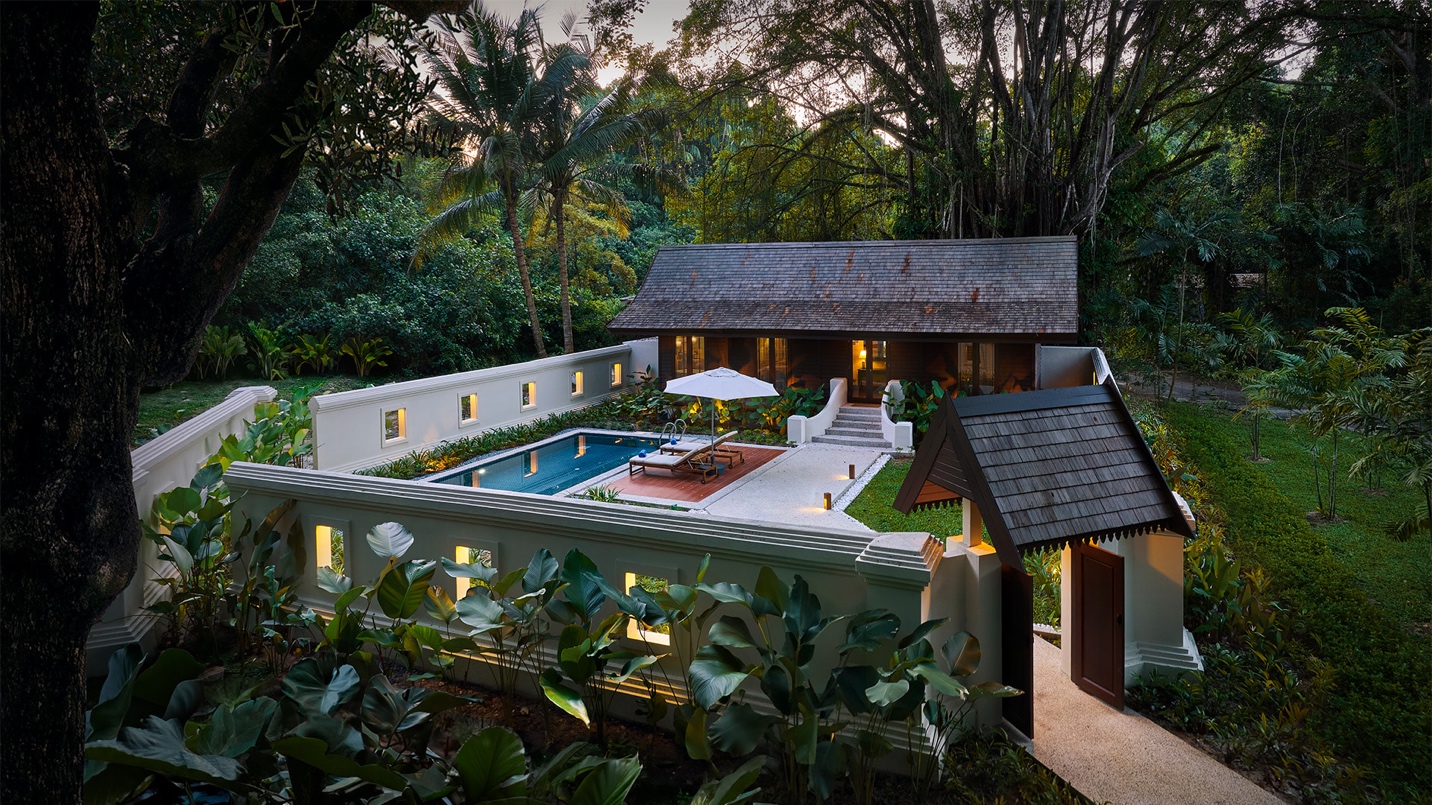
The grande dame of the coast, built in the style of 17th-century Malay palaces on a 17-hectare site near Dungun (Scott Dunn). Its turtle hatchery opened in 2016 with Lang Tengah Turtle Watch and now runs with marine NGO PULIHARA, reporting a hatching success rate of nearly 80% (eGlobal Travel Media). Community clean-ups along the resort’s 3.2 km frontage removed 1,350 kg of rubbish across two events in 2016 and 2017 (Vacations & Travel).
- What eco-travellers love: hands-on nest inspections, wooden-filled rooms and fixtures, a turtle nest adoption programme, locally recruited staff, river cruises and village cycling.
- The trade-off: with around 100 rooms, it is a full-scale luxury 5-star resort with luxury pricing and ammenities. It is also about 70 km south of Kuala Terengganu airport and far from the popular northern islands (eg: Perhentian and Redang Islands).
3. Lang Tengah Island resorts
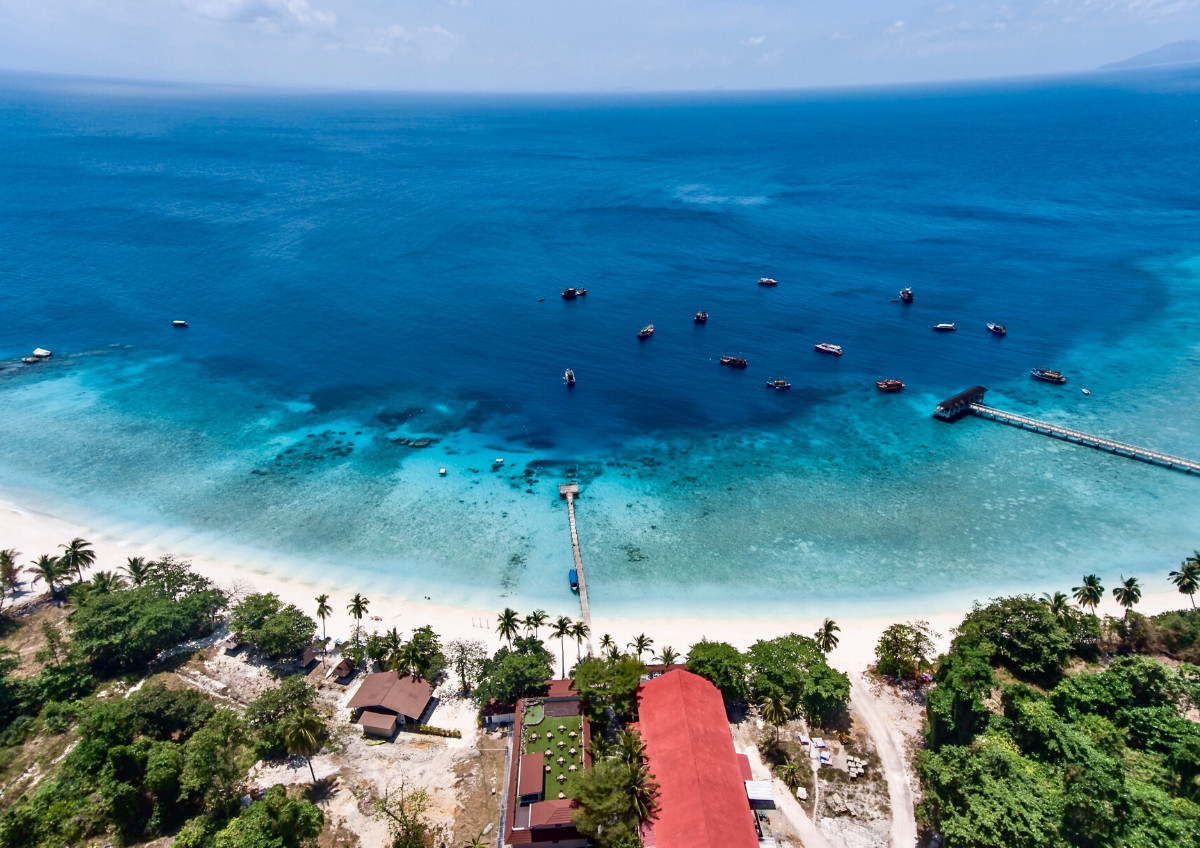
Lang Tengah has no roads and only three resorts: Summer Bay, Sari Pacifica and D’Coconut Lagoon (Southeast Asia Diving). Turtle Bay is set aside for nesting and research by PULIHARA, formerly Lang Tengah Turtle Watch (FMT). Summer Bay has also sunk artificial wrecks that now host growing coral and fish life (Underwater360).
- What eco-travellers love: volunteering and turtle patrols, primary rainforest walks, superb house reefs.
- The trade-off: island resorts depend on boats and, often, generators; Summer Bay draws large tour groups; and the season effectively closes from November to February with the monsoon.
4. The Resthouse, Perhentian Besar (Airbnb)
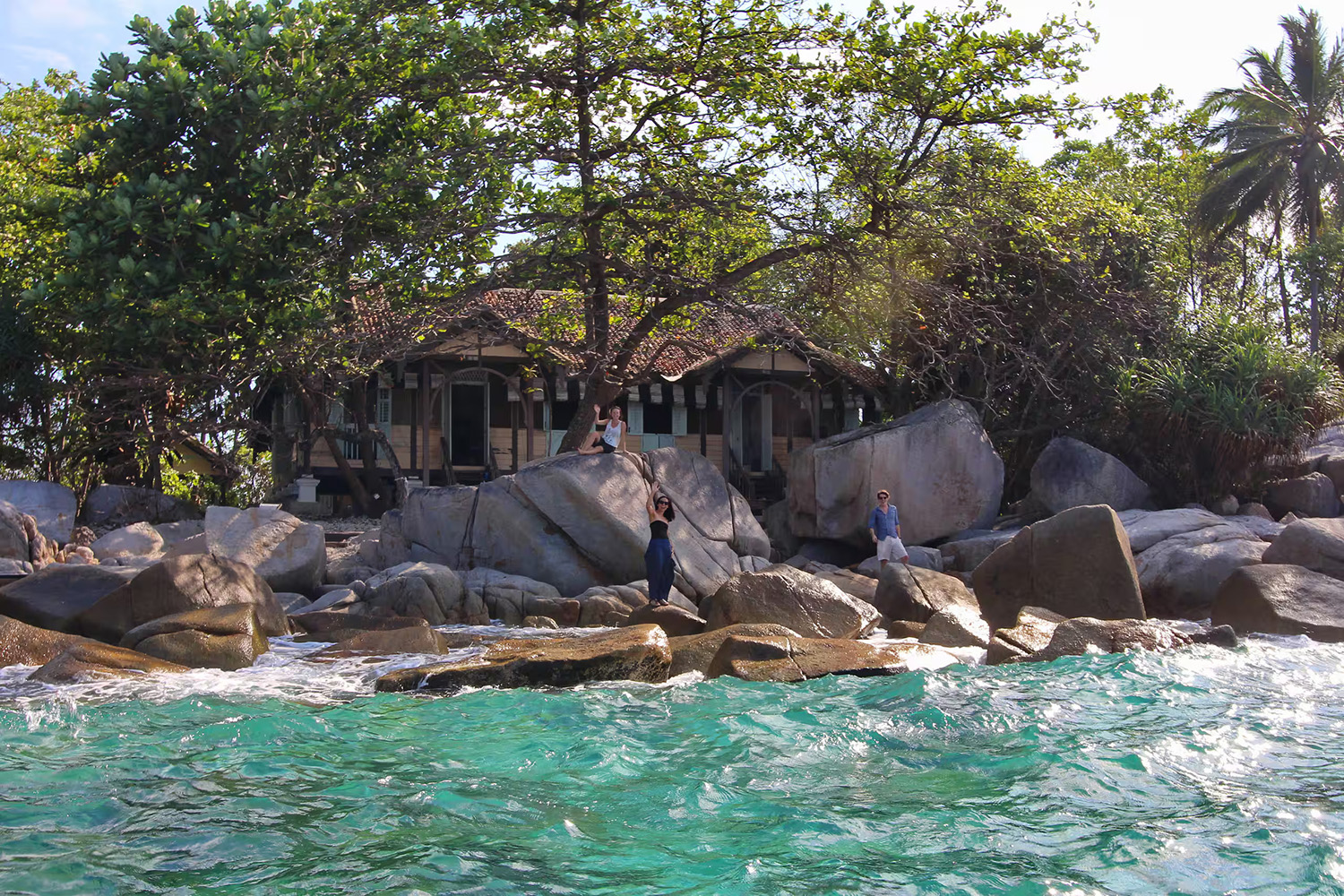
A rare eco Airbnb villa in Terengganu: a pre-war colonial wooden house moved from Perak to a quiet promontory on Perhentian Besar. It runs on 100% solar power, offers free filtered water, and won the Airbnb Green Stays Gold Award in 2021 (Airbnb listing).
- What eco-travellers love: genuine off-grid credentials, community-led hosting and a no-plastic ethos.
- The trade-off: rooms are cooled by fans, not air-conditioning; eight guests share two bathrooms; and there are no ATMs on the island. It might not be the most comfortable unless you are a into a pure raw eco-friendly travel experience.
5. Lake Kenyir houseboats
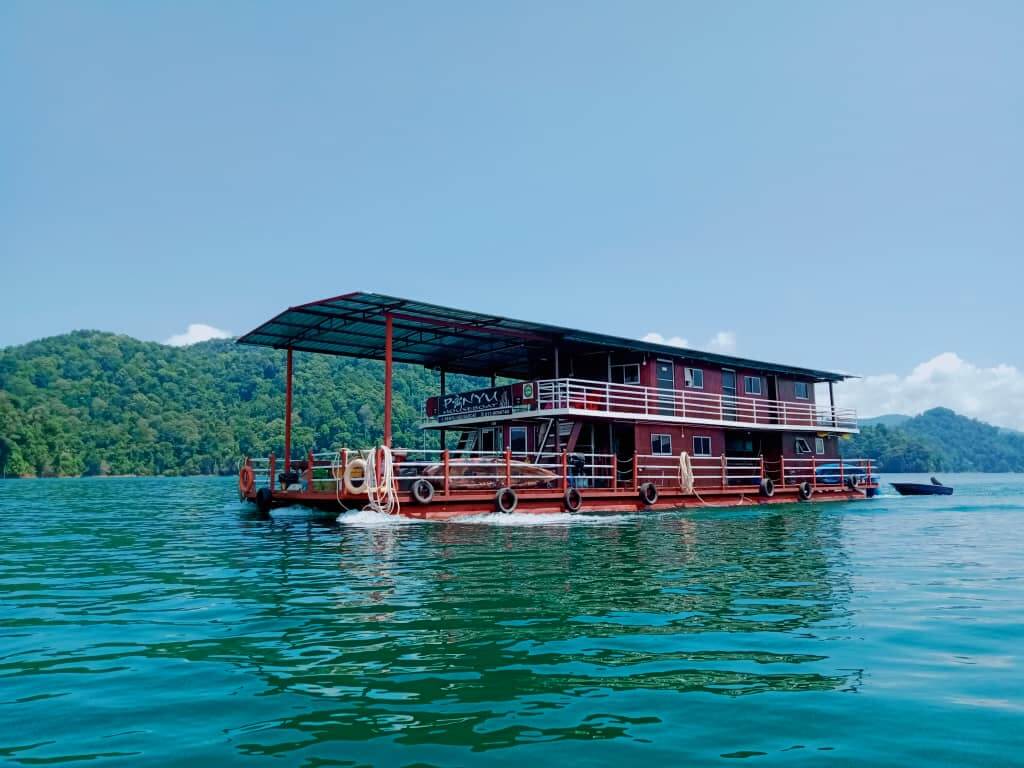
Inland, Malaysia’s largest man-made lake offers a different eco escape: sleeping on a houseboat among 340 forested islands, waterfalls and hornbills. Around 80 licensed houseboats operate, and stricter permits now require holding tanks so waste is not discharged into the lake (NST).
- What eco-travellers love: rainforest immersion, zero light pollution, wildlife.
- The trade-off: diesel engines, basic cabins, group-sized bookings, and no beach.
Honourable mention: community stays in Kampung Mangkuk
For those happy with simple rooms, the village homestays around Kampung Mangkuk and Penarik connect you with the Setiu Wetland Discovery group and its Wetland School, where locals lead mangrove, oyster and terrapin experiences (NST). The money stays local. The comforts, however, are basic and may not be suitable for longer stays (more than 2 nights).
At a glance
| Property | Area | Eco strength | Comfort trade-off | Indicative rate |
|---|---|---|---|---|
| Terrapuri Heritage Village | Penarik, Setiu | Restored heritage timber houses | Limited in-room connectivity | RM429–RM1,199 |
| Tanjong Jara Resort | Dungun | Turtle hatchery, community clean-ups | Large luxury resort, far from islands | Luxury tier |
| Lang Tengah resorts | Lang Tengah Island | Turtle Bay conservation, reefs | Boat access, monsoon closure | Mid to upper |
| The Resthouse (Airbnb) | Perhentian Besar | 100% solar, Green Stays award | Fans only, shared bathrooms | Mid |
| Kenyir houseboats | Hulu Terengganu | Rainforest immersion | Diesel, basic, no beach | Group packages |
| Kampung Mangkuk homestays | Setiu | Community income, wetland education | Very basic rooms | Budget |
Every one of these resorts and vacation home rental does something admirable on the sustainability front. However, only few manage to do it while delivering the creature comforts most families expect.
The best balance of modern eco-friendly accommodation: Katsetiu Villas, Setiu
Now, how about a modern beach house in Terengganu that retains its eco-friendly attributes?
Of everything I scouted, Katsetiu Villas strikes the best balance between comfort and an eco-friendly approach to design and build. It is a small, private cluster of four beachfront villas in Setiu, with a total build-up space of 3,500 sqft seated on a 1 acre beachfront land and its greatest green asset is one most resorts cannot buy: where it sits.
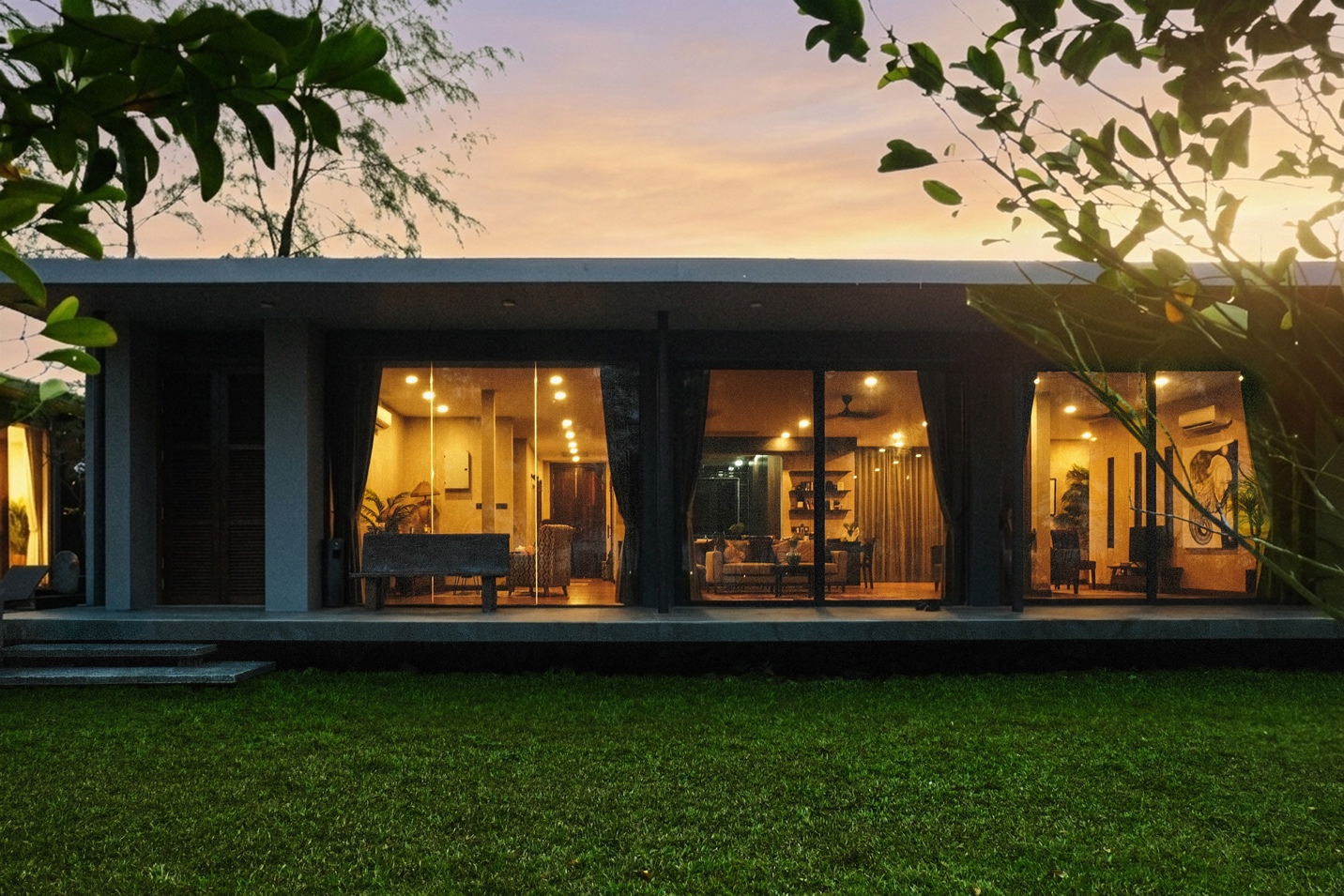
The villas face a quiet stretch of Pantai Chalok, next to the coastal beach stretch of Penarik Beach and Pantai Bari, looking out to Redang and the Perhentians.
This is a low-density population coastline area. There are no strips of cafés, no traffic jams, no nightly bass from a beach bar unlike in Bali, Pattaya or Phuket. Fewer people in Setiu district means less human waste reaching the sea, and with the property set well away from busy districts and daily commercial activity, there is very little exhaust from passing vehicles.
At dawn the loudest thing you hear is birdsong, a detail that crops up again and again in guest reviews. Yet it never feels like roughing it.
Now each villa is air-conditioned, the Wi-Fi is reliable, and there is a shared pool, a fully equipped kitchen, an outdoor shower and breakfast included in the rate. The design is mid-century modern with plenty of glass and open space, so the sea is part of every room.
Location and getting there
- About 40 minutes by road from Sultan Mahmud Airport in Kuala Terengganu; an airport transfer can be arranged.
- Roughly 10 minutes to Merang jetty for boats to Redang and Lang Tengah, making it a natural base for Redang Island snorkelling packages.
- Around 100 metres from the WWF turtle conservation and hatchery site, and close to the Setiu Wetlands for mangrove and firefly trips.
- Full directions are on the Katsetiu location page.
What it costs
Rates below are the property’s published prices before discounts, including breakfast. See the Katsetiu villa price list for current offers.
| Villa | Sleeps | Peak (1 Feb–30 Nov) | Off-peak (1 Dec–31 Jan) |
|---|---|---|---|
| Large Beach Main Villa (3 bedrooms) | 8, max 9 | RM2,100 | RM1,600 |
| Beach Villa A (1 bedroom) | 2, max 4 | RM650 | RM470 |
| Beach Villa B (1 bedroom) | 2, max 4 | RM650 | RM470 |
| Garden Rear Villa (1 bedroom) | 2, max 4 | RM650 | RM470 |
| Whole estate, all 4 villas | up to 20 | RM3,500 | RM3,000 |
Booked as a whole, the estate works out to about RM175 per person per night at peak. For a family reunion or a group of divers, that is excellent value for a private beachfront compound with a pool.
Why Katsetiu is considered a modern eco-friendly accommodation?
A good location is always a good foundation in any eco-friendly place that I have travelled and Setiu fits in perfectly. A good head start. What persuaded me is that Katsetiu Villa backs its setting with nine concrete eco-friendly practices.
1. Energy-efficient villas that need half the cooling.


The villas use about 50% less power to cool than a conventional build. Tinted glazing, energy-efficient air-conditioners and insulated ceilings and walls keep out the heat of the coastal sun, so you stay cool without running the compressor flat out.
2. Built around the trees, not over them.
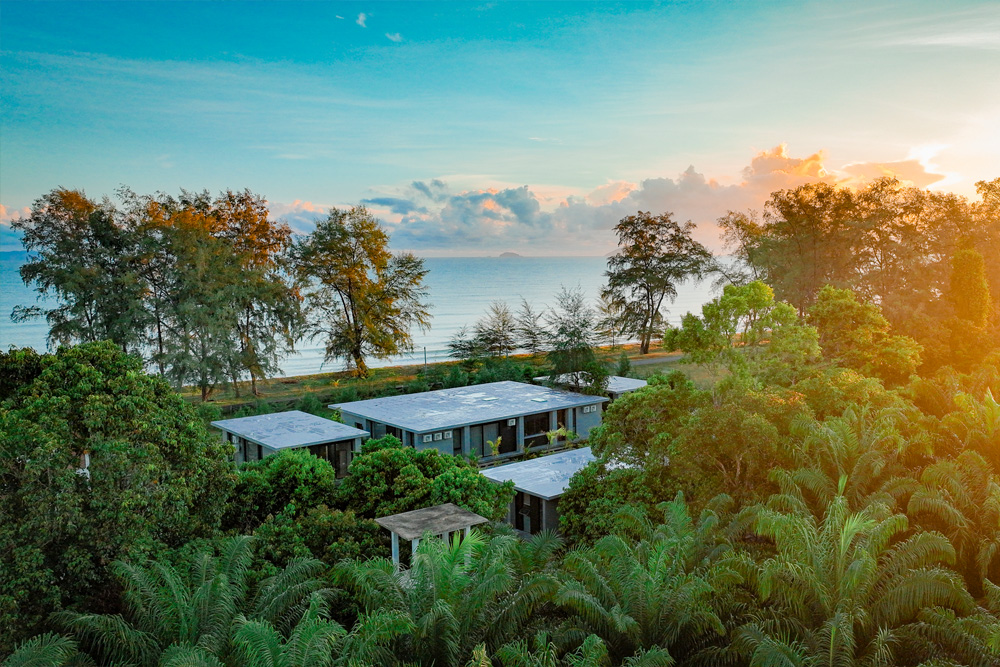
The houses were designed around mature trees that grow naturally on Terengganu’s coastal beaches. Smaller trees and plants used in the landscaping were grown locally by community nurseries, so the garden is native, hardy and supports local livelihoods.
3. Recognised as a turtle-friendly accommodation.


Katsetiu holds turtle friendly accommodation status in Terengganu simply because the whole beach stretch is a quiet, almost untouched, making it a favourite spot for turtles to lay eggs each year. With certified WWF-turtle friendly accommodation means the villa adopt warm, downward-facing exterior lights with no lights facing the beach at night, preserving the beach natural vegetation and minimal sand disturbance, so the shore stays as natural as possible for turtles nesting between April and October.
4. Regular beach cleaning with NGOs and neighbours.


The Katsetiu Villa team runs clean-ups with local communities and environmental groups each year. In one two-hour session at Pantai Bari, 18 volunteers with Geng Plastik Ija and Majlis Daerah Setiu cleared 150 kg of debris (read the beach clean-up story) together with the team and neighbours. Across the year, 100 to 500 kg of beach waste is collected, a level of hands-on community commitment few properties of its size can match.
5. Natural groundwater, double-filtered.
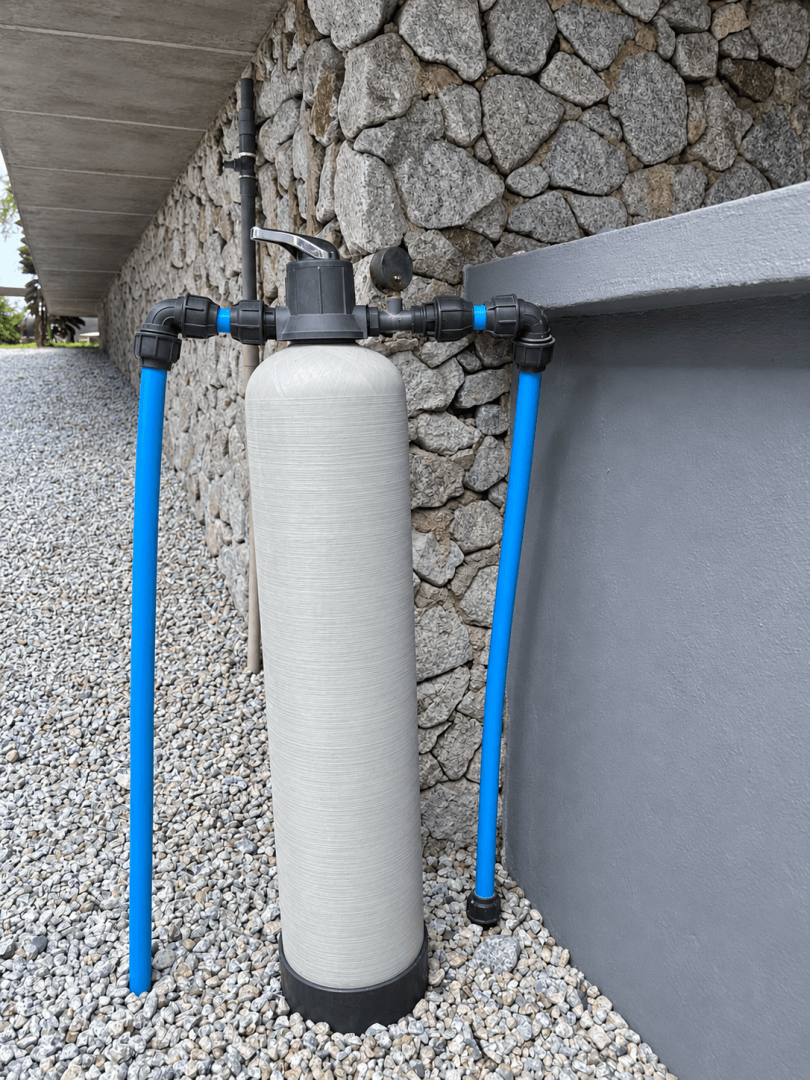
Water for the villas is drawn from natural groundwater (10-20 feet deep) and passed through a double filtration system, so what comes out of the tap is clean and pure without trucking in bottled supplies. This eco-friendly approach sets Katsetiu Villa apart from the rest of the resorts, chalets and vacation home rentals in Terengganu.
6. A leave-no-trace beach.


Guests are encouraged not to take food, plastic bottles or disposable packaging onto the beach, which keeps litter out of the tide line and away from wildlife and marine life. The house rules set the tone. That is why Katsetiu Villa attracts divers, naturists, island hoppers and beach lovers who simply enjoy quiet modern luxury accommodation with eco-friendly features.
7. Light-touch eco-housekeeping.
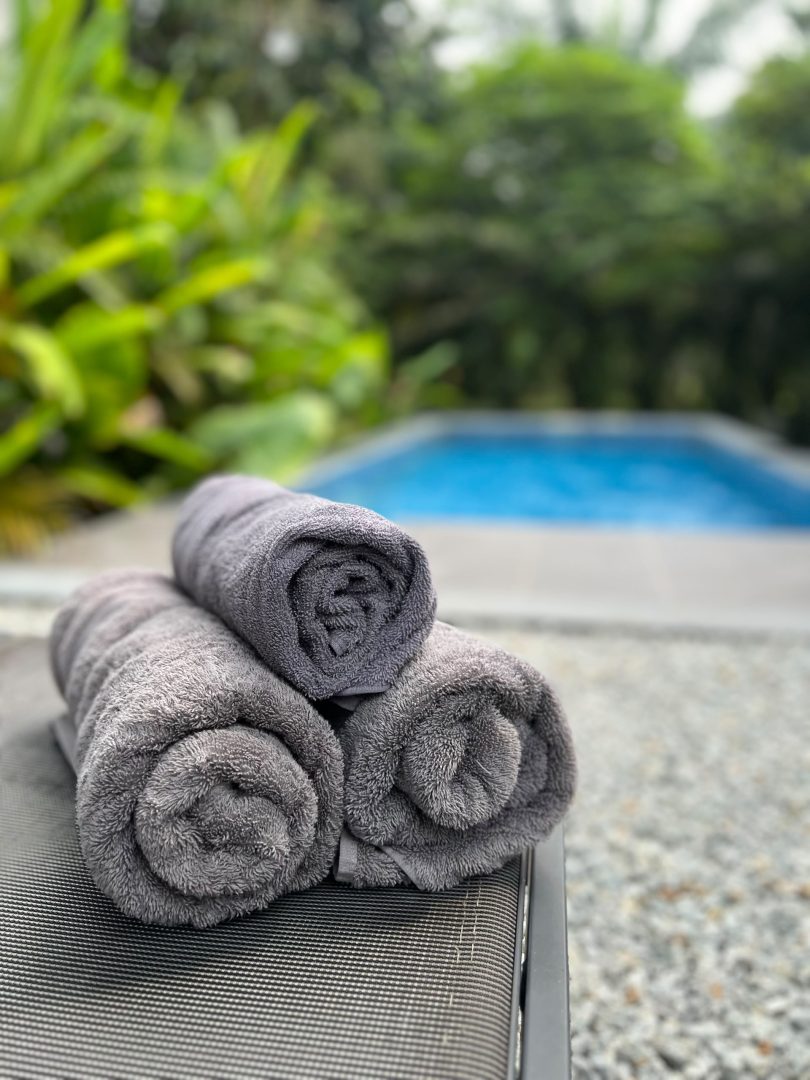
Daily housekeeping is kept to a minimum during your stay, saving water, detergent and electricity. Daily fresh towels are there when you need them (upon check in), but it won’t get replaced daily until you check out. Katsetiu Villa’s save-the-water policy ensures the team use less water and energy to wash and dry the towels.
8. Reclaimed and recycled materials.
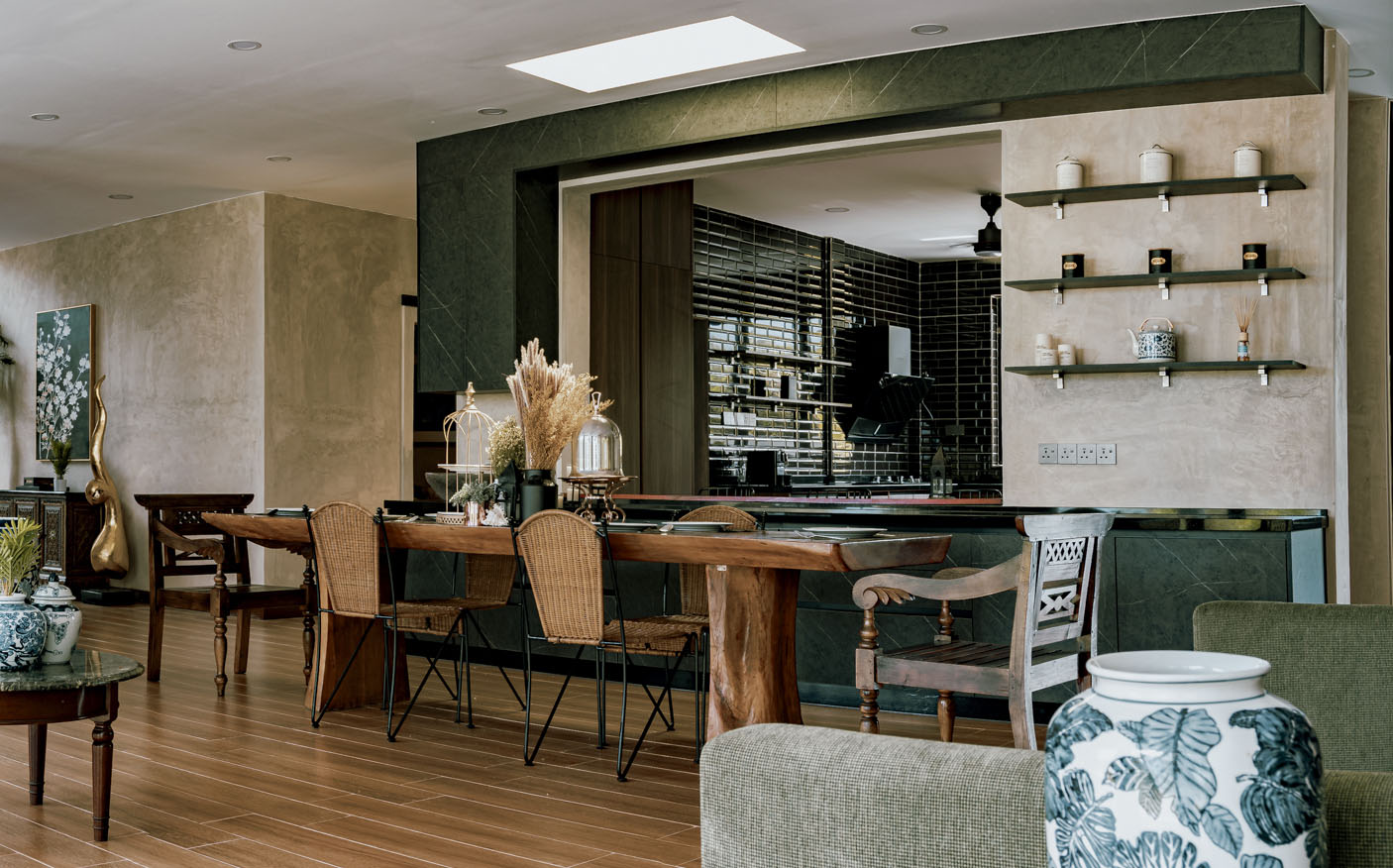
Some landscape features and interior pieces use natural driftwoods found on the shore, recyclable wood and stone. A number of chairs and tables were sourced from pre-loved shops and refurbished for comfort, giving good furniture a second life. This eco-friendly design feature makes Katsetiu Villa stands out even more in Terengganu given its well-curated approaches to sustainability.


9. Artisan rugs in natural fibres.
Pre-washed, distressed rugs and carpets are made from cotton and wool blends with natural dyes by artisans. They feel lovely underfoot and avoid synthetic microfibres.
The beauty of this modern eco-friendly approach by Katsetiu Villas is that none of these practices asks you to give up comfort. Now, that is precisely the point when choosing the best eco-friendly place to stay in Terengganu – rare but possible to find.
The verdict: green, comfortable and genuinely quiet
Terengganu rewards eco-traveller who chooses carefully. Heritage villages, turtle hatcheries, solar-powered island houses and lake houseboats all have their place in the category of traditional eco-friendly accommodations.
But if you want energy-efficient air-conditioning, well-glazed windows, modern amenities such as Wi-Fi and a pool without the guilt, the strongest all-round choice is a small, low-density modern beachfront villa property that treats its beach as something to protect rather than consume. On the east coast of Terengganu, a modern eco-friendly sanctuary place worth staying is Katsetiu Villas.
A few tips from the road:
- Time it with the turtles. Visit between April and October for nesting season and calm seas. Book early, as this is also peak season.
- Go for the whole estate with friends. Splitting all four villas between up to 20 guests brings the cost to about RM175 per person per night and keeps your group’s footprint in one place.
- Pack light and plastic-free. Bring a refillable bottle, reef-safe sunscreen and a cloth bag. Join a beach clean if one is running during your stay; it is the best hour you will spend.
- Stay longer, move less. Use the villas as a base for Redang snorkelling day trips, Setiu Wetlands tours and forest hiking trails rather than hopping between hotels.
Ready to plan? Check the latest villa rates or contact the Katsetiu team to book your eco-friendly stay in Terengganu.