
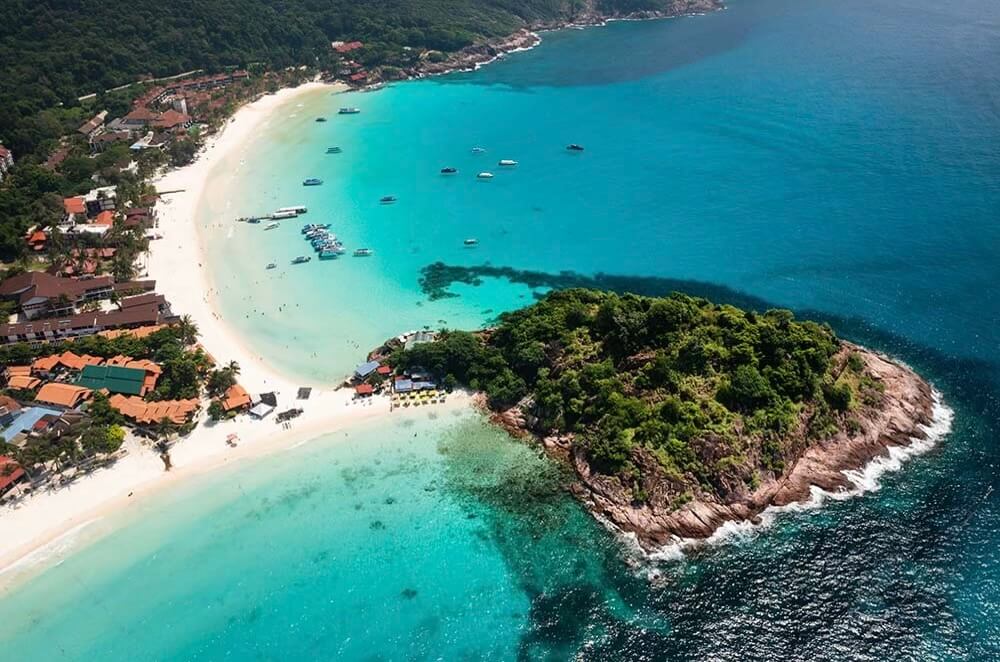
Redang Island at a glance
Redang Island, or Pulau Redang, is one of the largest and best-known islands off the east coast of Peninsular Malaysia. It lies roughly 45 km off Kuala Terengganu, is about 7 km long by 6 km wide, and has an area of around 24.2 sq km. Redang is the biggest island in the wider Redang archipelago and is widely known for clear water, white-sand beaches, reef life and resort-based beach holidays.
For travellers, the island sits in a sweet spot between easy tropical escapism and serious marine appeal. It is polished enough for first-time beach holidaymakers, but still strong on snorkeling, scuba diving and wildlife value. That combination is a big reason Redang has long held a more upscale image than some other east-coast islands.
Redang Island history: from fishing island to marine tourism icon
Redang’s modern tourism story is closely tied to marine conservation. Resort development began in the late 1980s, and the island gained momentum after the surrounding waters were protected as part of Malaysia’s marine park framework in the early 1990s. The wider Redang archipelago and surrounding waters were later formally gazetted as a marine park under the Establishment of Marine Parks Malaysia Order 1994.
Another important chapter in Redang’s history is turtle conservation. The Sea Turtle Research Unit (SEATRU) at Universiti Malaysia Terengganu began a long-term tagging and nesting study at Chagar Hutang in 1993. Chagar Hutang was later declared a turtle sanctuary in 2005, reinforcing Redang’s identity not just as a resort island, but as one of Peninsular Malaysia’s most important marine conservation landscapes.


That dual identity matters. Redang is not just a beach with resorts on it. It is a destination where tourism, reef protection and turtle research have all shaped the visitor experience.
Redang Island size, geography and setting
Geographically, Redang is a relatively large, forested island with hilly terrain. Its highest point is Bukit Besar at 359 metres. Most of the island’s tourism activity is concentrated along the better-known beach zones, especially Pasir Panjang, while other resort clusters sit around Teluk Dalam and Teluk Kalong.
This layout shapes the feel of the island. Travellers generally experience Redang through a series of distinct pockets rather than one single built-up beach town.
Resorts tend to dominate the accommodation landscape, so the stay feels more self-contained than on backpacker-oriented islands.
Redang Island tourist arrivals: how popular is it?
Recent academic work citing Tourism Terengganu data reported about 127,470 tourists in 2022 and 129,749 in 2023 entering Redang Island with 10% annual growth after 2024 according to reports.
Tourist arrivals were counted for only about eight months of the calendar year because Redang’s tourism season is heavily affected by the monsoon closure period.
That is an important point for travellers and marketers alike: Redang’s tourism volume is meaningful, but it is also highly seasonal.
The island is not an all-year mass-market destination in the same way as some urban or west-coast beach areas. Its rhythm is defined by weather windows, sea conditions and the northeast monsoon.
Best diving in Redang Island: why divers rate it so highly
Redang is one of the standout dive destinations on Peninsular Malaysia’s east coast. Marine and diving sources describe the island as having more than 20 dive sites across reef, wall, sandy-bottom and drift environments, with conditions suitable for both beginners and more experienced divers.
Among the dive areas and marine highlights commonly associated with Redang are:
Pasir Panjang house reefs and nearby coral gardens
These are often the first places snorkellers and newer divers encounter Redang’s appeal: shallow water, clear visibility in season, reef fish close to shore and easy access from resort beaches.
Eastern shoreline reefs
Marine park material notes that the eastern reefs are among the biologically richest parts of Redang, helped by exposure to nutrient flow and wave action from the South China Sea. For divers, that usually translates into healthier reef structures and stronger biodiversity.
Turtle-rich zones around Chagar Hutang and surrounding waters
While Chagar Hutang itself is conservation-sensitive and controlled, Redang broadly is well known for turtle encounters. The island’s reputation for green and hawksbill turtles adds a powerful wildlife dimension to the diving and snorkeling experience.
General Redang dive network
Independent Redang diving references describe a mix of coral gardens, wall dives, beach dives and deeper sites, which is one reason the island appeals to a broad market rather than just hardcore technical divers.
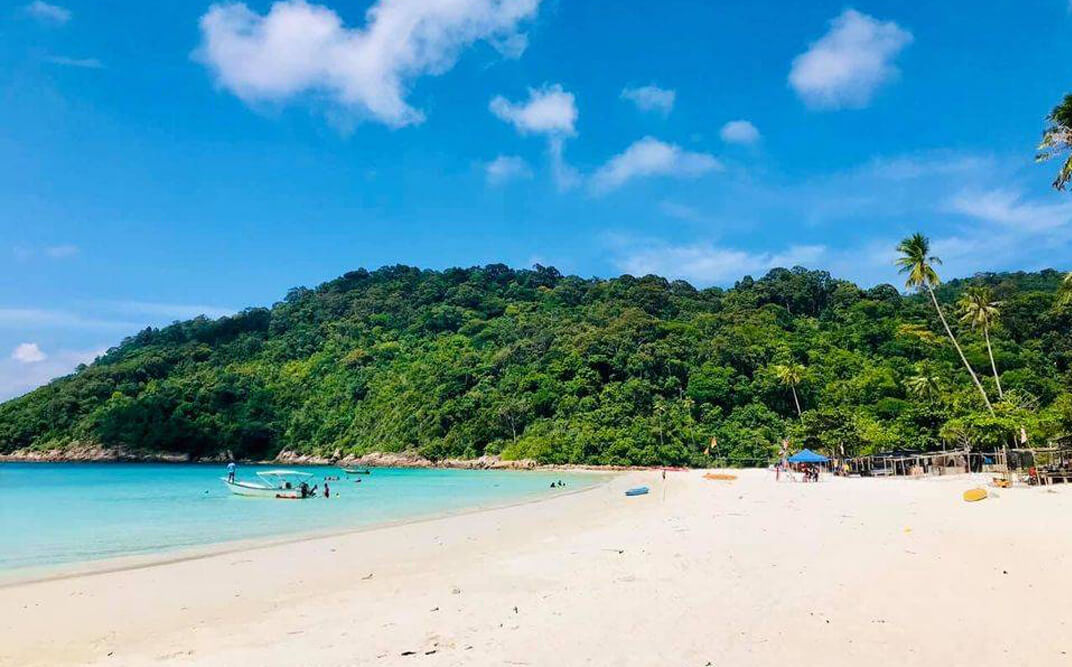
What to expect on Redang Island: the actual travel experience
1. A resort-led island holiday
Redang is not best approached as a bustling local island town. It is more of a resort-oriented marine holiday destination. That means travellers should expect packaged stays, boat transfers, bundled snorkeling trips and a more curated vacation rhythm.
2. Beautiful water, but seasonal access
In the open season, the water can be exceptionally clear and photogenic. During the monsoon months, however, transport is limited and many resorts close. This makes timing one of the most important parts of planning a Redang trip.
3. Snorkeling is part of the core appeal
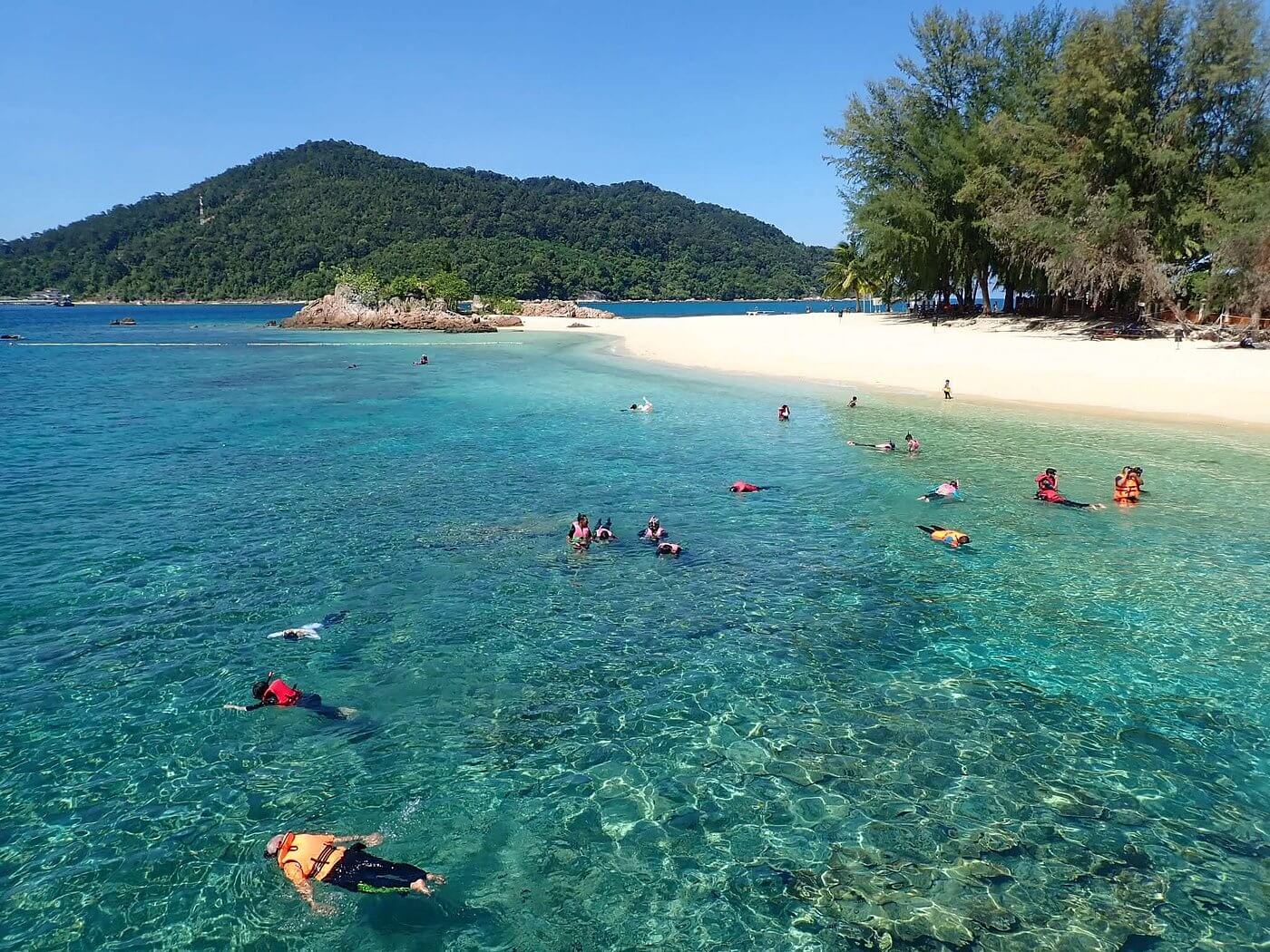
Even non-divers can enjoy Redang. Coral and fish are often accessible close to shore in some areas, especially around resort beaches, which is one reason Redang works for families and casual tropical holidaymakers as well as dive travellers.
4. Conservation is part of the destination
Redang is not just about leisure. Marine park rules, turtle habitats and protected reef areas are part of the island’s identity. Travellers should expect rules around not taking coral, shells or marine life, and should treat turtle and reef encounters with care.
5. The mood is polished, beachy and relatively upmarket
Compared with more budget-leaning island experiences elsewhere, Redang has long been viewed as more polished and resort-forward. The beachscape is still the star, but the tone is less backpacker hub and more tropical escape.
When is the best time to visit Redang Island?
The practical travel window is generally during the island’s open season outside the northeast monsoon period. Sources note that ferry schedules become heavily restricted and many resorts shut between roughly October and March, with the wettest stretch typically falling between November and February.
For most travellers, that means the best Redang experience usually comes when the sea is calmer, marine visibility is better, and resort operations are in full swing
Why Redang still stands out
Redang remains compelling because it delivers three things in one destination: easy tropical beauty, credible marine biodiversity, and a conservation backstory that gives the island more substance than a typical sun-and-sand resort stop.
Its white beaches may get the attention first, but the island’s real strength is the way reef life, turtle conservation and relaxed resort travel sit together. (Malaysia Tourism)
Redang Island FAQ for travellers
How big is Redang Island?
Redang is about 24.2 sq km, roughly 7 km long and 6 km wide. (Wikipedia)
Is Redang good for snorkeling and diving?
Yes. Redang is one of the strongest snorkeling and scuba destinations on Malaysia’s east coast, with 20+ dive sites and reef access that suits both casual visitors and dedicated divers.
What are Redang’s best-known marine attractions?
Its biggest draws are clear water, coral reefs, reef fish, and turtle encounters, plus protected marine park landscapes around the island group. (Malaysia Tourism)
Is Redang open all year?
No. Tourism is strongly seasonal, and many resorts and ferry operations are affected by the northeast monsoon, especially from around October to March.
How many tourists visit Redang?
A recent academic source citing Tourism Terengganu reported 127,470 arrivals in 2022 and 129,749 in 2023, with counts reflecting the island’s limited open season rather than a full 12-month operating year. (Unimas Publisher)
Is Redang suitable for families?
Usually yes. Because much of the island is resort-based and many snorkeling experiences are easy to access, Redang works well for couples, families and first-time island travellers, not just divers.
What makes Redang different from other Malaysian islands?
Its combination of resort comfort, marine park status, strong reef reputation and turtle conservation significance gives it a more polished and ecologically meaningful profile than many beach-only destinations.
Further references for travellers
For deeper trip planning, the most useful starting points are Tourism Malaysia for destination basics, Marine Parks of Malaysia for protected-area guidance, SEATRU / Universiti Malaysia Terengganu for turtle conservation context, and PADI / established Redang dive guides for underwater planning. The sources used above include those references and the current tourism-arrival figure cited through recent academic work. (Malaysia Tourism)